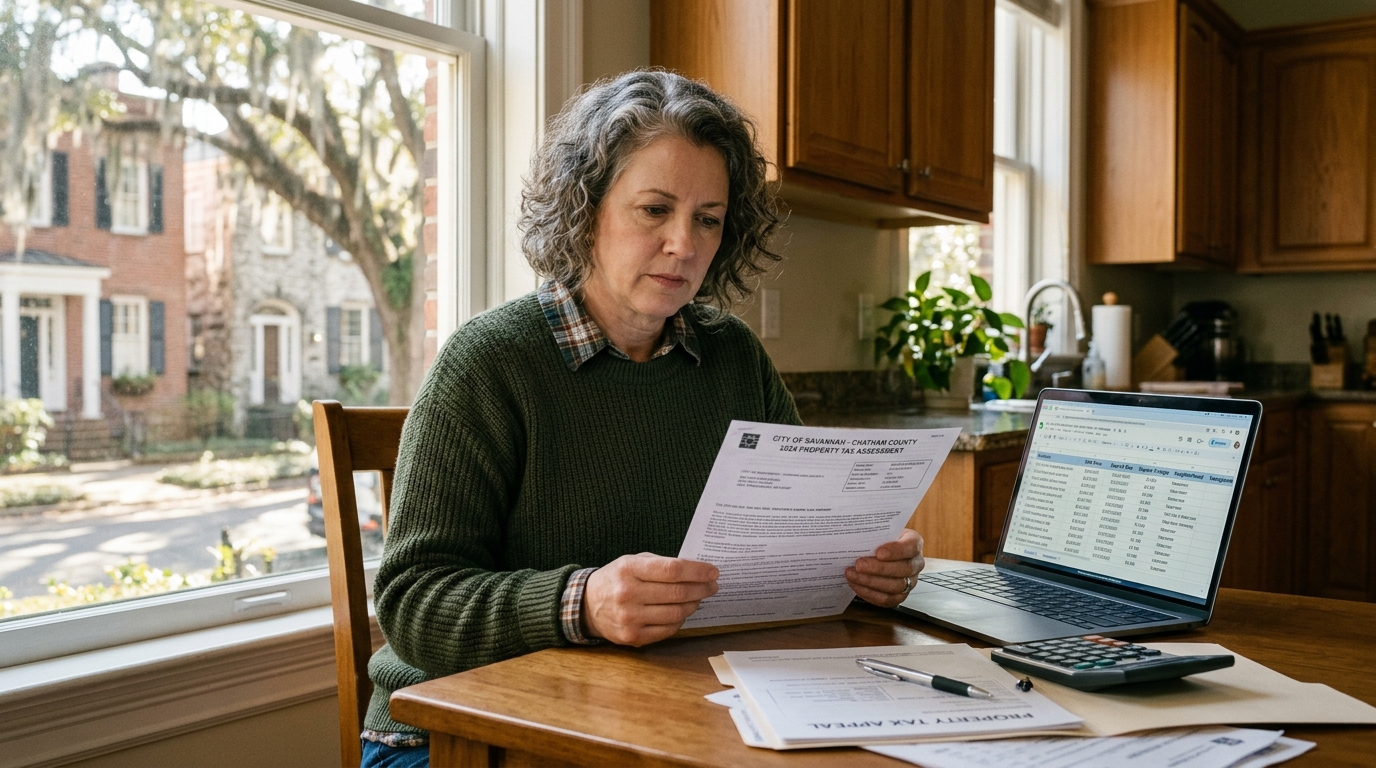
That letter arrives in your mailbox every spring, and this year it hits differently. Your home's assessed value jumped. Maybe it's a 10% increase, maybe it's more. Your stomach sinks as you do the math on what that means for your annual property taxes. Here's what most homeowners don't realize: you don't have to accept that number. You have options, and they can save you real money.
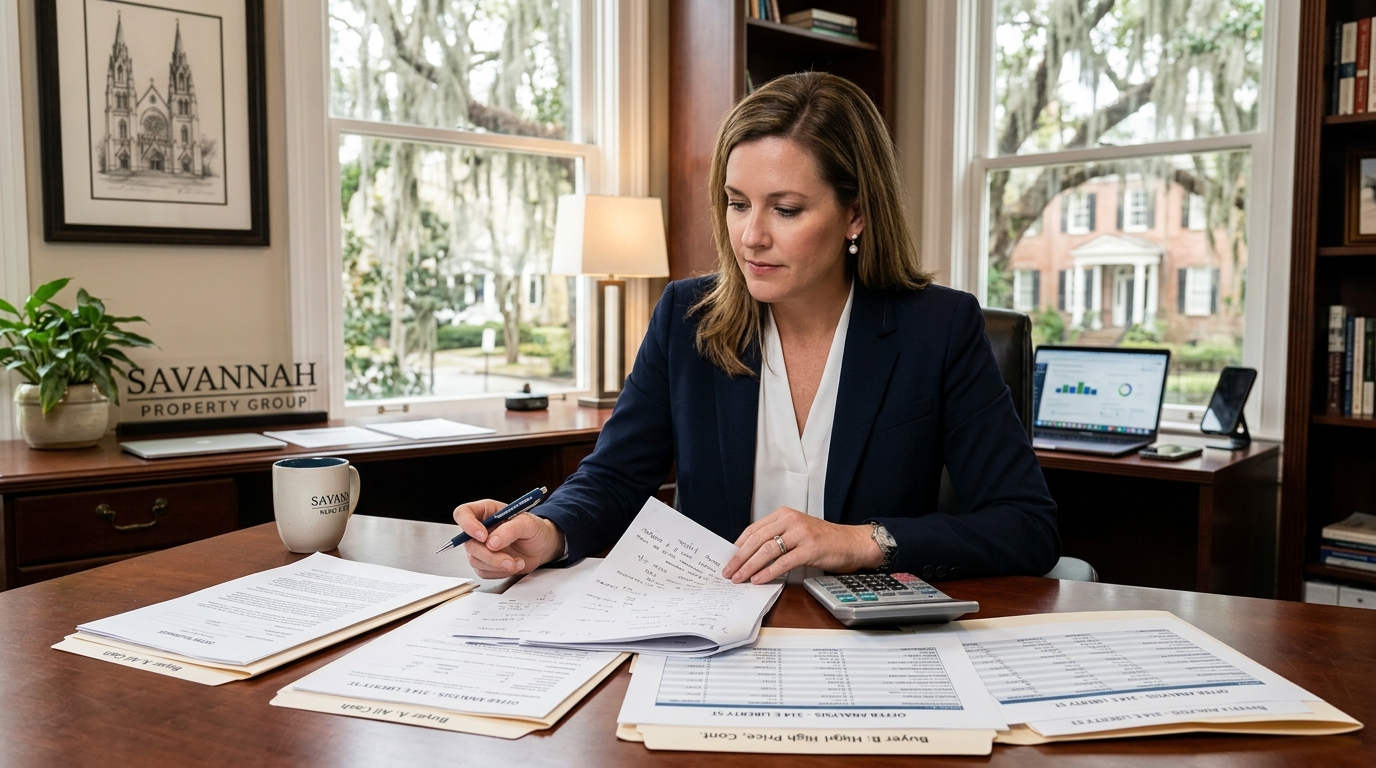
As a real estate agent working in Savannah, I've had countless conversations with clients who received assessment notices that didn't match reality. The market has been moving fast, values have shifted, and sometimes the county's numbers simply don't reflect what's actually happening in your neighborhood. The good news is that you have the legal right to appeal your property's assessed value, and a successful appeal can lock in savings for three years through Georgia's 299c freeze.
Why Your Assessment Went Up
This part feels almost unfair, but it's how the system works. When your home appreciates in value, the tax assessor takes notice. Home prices in Savannah have been climbing, especially as more people discover our beautiful historic neighborhoods and coastal proximity. That's great for your home's equity, but it means your assessed value climbs right alongside it. Here's the critical part: Georgia assesses all property at 40% of fair market value. You can't change that ratio, it's set by the state.
What you can challenge is whether the county's estimate of your home's fair market value is actually accurate. That's where an appeal comes in.
Understanding the Georgia Appeal Process
Georgia makes this fairly straightforward compared to other states, which is one of the few silver linings. Georgia counties issue assessments annually, with each county issuing a written assessment between April and June, and the taxpayer having 45 days from the date of the assessment to file an appeal.
Here's the timeline that matters: When you receive your assessment notice (usually May through June in Chatham County), that's your clock starting. You've got 45 days after the date printed on your assessment notice to file. Mark it on your calendar immediately. Missing this deadline means waiting another full year to challenge the assessment.
The form you need is simple to locate. To file, use any search engine and enter "Georgia Form PT-311A," fill out that form, attach a copy of your notice of assessment, and mail it to the address on the notice. Some Savannah-area counties now accept online appeals, so check your specific county's website.
What Evidence Actually Wins Appeals
I can tell you from working with real estate data constantly: not all evidence carries equal weight. Comparable sales data from similar nearby homes is the most effective type of evidence for property tax appeals. This is your strongest weapon, and it's something I help clients understand all the time in my practice.
Here's what you need: 3-5 comparable sales within 0.5 miles that sold in the last 6-12 months carry the most weight in hearings. You're looking for homes similar to yours in size, age, condition, and most importantly, location within Savannah or your specific neighborhood. These sales prove what the actual market is paying right now, not what a model says homes should be worth.
Let me be clear about what doesn't work. Zillow or Redfin estimates and algorithmic valuations are not accepted as evidence—only actual sale prices matter. I see homeowners try this all the time, thinking their Zestimate will help their case. It won't. The appeal board wants real market transactions.
Beyond comparable sales, there's one other evidence type that wins quickly: factual errors in the assessment record. Assessment record errors (wrong square footage, bedroom count, lot size) are the easiest wins because they are factual, not subjective. If the county has your home listed at 2,400 square feet when it's actually 2,100, that's something you can definitively prove and they'll fix it.
Building Your Case Step by Step
Start with your property's record card, available free from your Chatham County assessor's office. Request your property record card from your county assessor, which lists all the data the county used to calculate your assessed value, and compare it line-by-line against your home's actual features. Circle anything that looks wrong. Does the square footage match your closing documents? Are the number of bedrooms and bathrooms correct? Is the condition code accurate?
Next, spend time finding good comparable sales. You don't need ten mediocre comps. You need three to five really solid ones. Look at homes that actually sold in your price range and neighborhood within the last year. If you're in the historic district of Savannah, don't use a Pooler home as a comp. Stay local and specific.
Once you have your comps, create a simple comparison. Show the price per square foot of each comparable sale next to yours. Note any adjustments—maybe one sold a year ago so you account for market movement, or maybe another is in slightly better condition. Create a grid showing your property versus each comp with adjustments for differences, so if your assessment is $450,000 but three similar homes sold for $380,000-$410,000, that's compelling evidence.
What Happens Next
After you file, you'll typically get an opportunity for an informal review with the county assessor before any formal hearing. Filing an appeal guarantees your right to meet with the county appraisers, check their information, compare it with your own research, and even negotiate with the county appraisers on your valuation, and you can meet with the county appraisers, check their calculations, and make sure their estimate of value is fair. This is your chance to present your case one-on-one.
Many people successfully resolve their appeals right there in that informal review. If you don't reach an agreement, it escalates to the Board of Equalization, which is the formal hearing process. In Georgia, you file an appeal with the Board of Equalization, and an informal review is available before filing a formal appeal.
Here's something important that I always tell my clients: Georgia is one of the few states where a failed appeal can actually increase your assessed value. This isn't meant to scare you away from appealing—successful appeals happen regularly. It just means you should prepare carefully and be confident in your evidence before filing.
The Real Financial Picture
Let me give you actual numbers. Say you successfully challenge an assessment and save $50,000 in assessed value on a Savannah home. A successful appeal triggers the 299c freeze, locking your assessed value for three years. That's three years of property tax savings, which compounds. On a typical Chatham County millage rate, that could easily mean $500 to $1,500 in savings annually, depending on your exact situation.
That's money worth fighting for, and it's money that's sitting on the table if you don't appeal.
Should You Handle This Yourself or Get Help
The Georgia appeal process is accessible enough that many homeowners handle it themselves. You've got your form, you understand the deadline, and you can gather comparable sales online. The risk is in incomplete evidence or missing something in the process.
I help clients understand their assessment notices and can point you toward good resources. I know Savannah's neighborhoods deeply—which comps truly match your home's location and character. If you're serious about your appeal, that local knowledge matters. I use your county assessor's website for free sales records, or services that compile professional comparable sales analysis to understand whether an appeal makes sense for your situation.
Whether you go it alone or get professional support, the most important thing is acting within that 45-day window. Don't put that assessment notice in a drawer thinking you'll handle it later.
Start Today
If your assessment notice arrived and your gut told you it was too high, trust that instinct. Look at your notice, mark your calendar for day 45, and start gathering evidence. For Savannah homeowners, I'm here to help you understand what your property is actually worth in today's market and whether challenging that assessment makes financial sense for you.
I can be reached through my website at jodiharstine.housejet.com, and I'm happy to talk through your assessment and what an appeal might look like. You've worked hard to build equity in your Savannah home. You shouldn't overpay on taxes based on an inaccurate valuation.